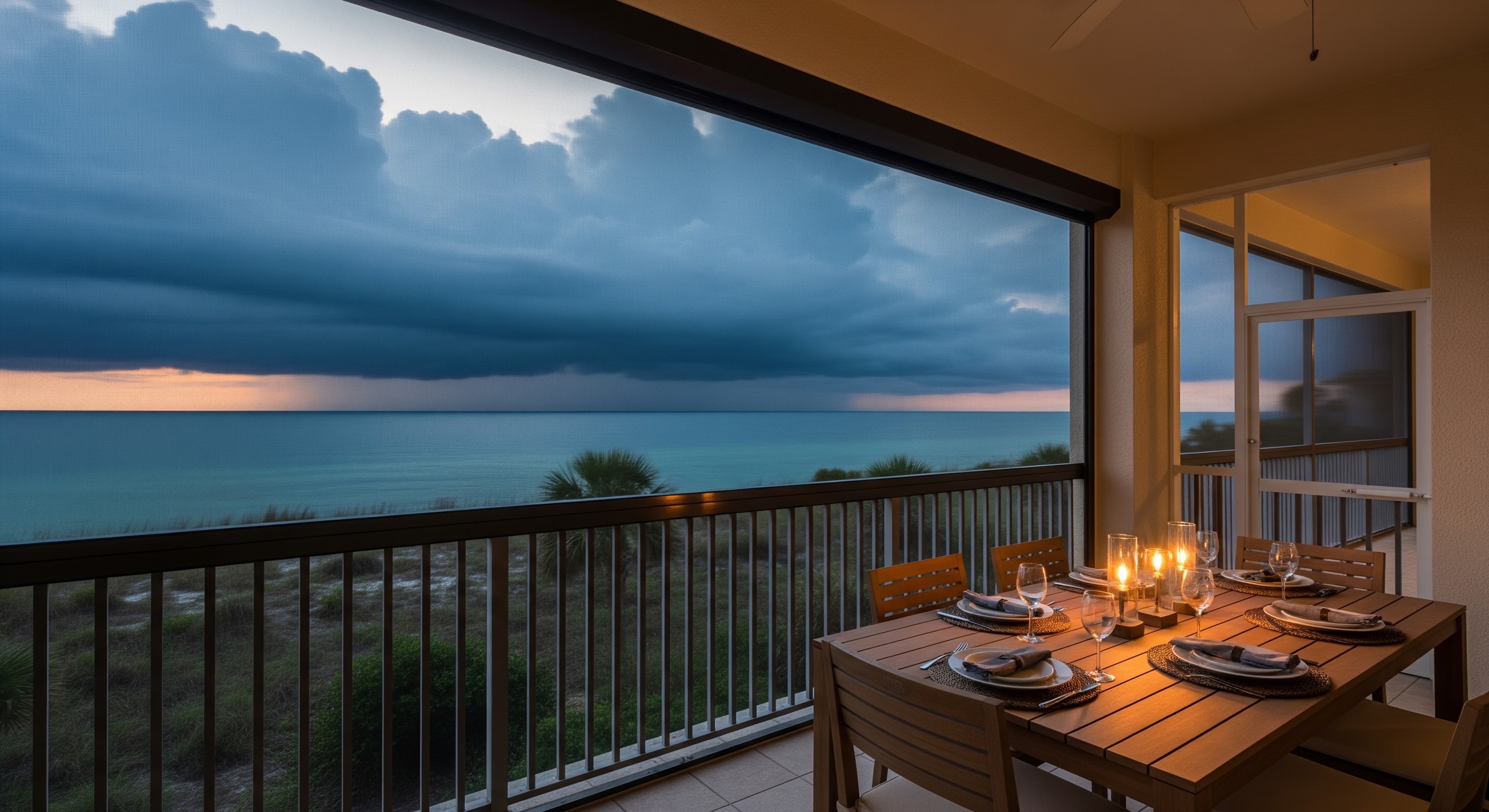
Labor Day Falls Right in the Middle of Hurricane Season — Here's What Actually Wrecks a Coastal Cookout
Labor Day Falls Right in the Middle of Hurricane Season — Here's What Actually Wrecks a Coastal Cookout
Labor Day 2026 falls on September 7 — three days before September 10, which NOAA's National Hurricane Center identifies as the climatological peak of the Atlantic hurricane season, the single date on the calendar most likely to have a tropical system active in the basin. That's not a coincidence worth being alarmed about, but it is worth planning around: for anyone hosting outdoors on the Florida coast this particular weekend, the odds of unsettled weather are higher than at almost any other point in the year. This is the first post in a four-part series on getting a coastal outdoor space ready for the holiday. Here's what actually tends to wreck it, and why most of it has nothing to do with a named storm.
You don't need a hurricane — you need the week around one
According to NOAA's National Hurricane Center, September 10 is the climatological peak of the Atlantic hurricane season — the date, across more than a century of records, most likely to have a tropical system active somewhere in the basin — with most of the season's activity falling between mid-August and mid-October. Labor Day 2026 lands squarely inside that window, three days before the statistical peak itself. That doesn't mean a hurricane is coming this particular weekend; most years, nothing makes landfall at all in that stretch. It does mean the odds of unsettled tropical weather are simply higher this week than in, say, late October or early June, which is worth knowing before you plan anything outdoors.
The bigger risk most weekends isn't the named storm — it's the wind that shows up without one
A named storm gets days of warning. A gusty coastal afternoon does not — and on the Florida coast, ordinary wind is often enough to catch a screen, awning, or shade sail that was never rated for it. This is the actual reason a hurricane-rated product category exists in this market at all: not for the three days a year a hurricane is bearing down, but for the ordinary weekends the wind is simply higher than whatever's currently up was built for.
We'll say plainly where we are on this ourselves: GoFenetex markets a hurricane-rated screen tier (MaxForce) described as meeting Miami-Dade and Florida High-Velocity Hurricane Zone requirements. We're not going to cite a specific certification number in this post until we've independently verified it — that verification is in progress. If wind resistance is the deciding factor in a purchase, ask your dealer for the actual approval documentation rather than taking a product description at face value, ours included.
And even on a calm day, heat alone empties a patio
Set weather risk aside entirely and coastal Florida in early September is still deep summer. An unshaded patio in direct afternoon sun tends to clear out well before a Labor Day gathering is supposed to end — not because anything went wrong, just because nobody planned for shade. It's the least dramatic item on this list and the most consistently true one.
What this actually means for this coming weekend
None of this is a reason to cancel a Labor Day gathering on the coast — it's a reason to check, this week, what your outdoor space is actually built to handle, rather than finding out the hard way on Saturday. If you already know your current setup isn't rated for wind or doesn't do anything for afternoon sun, that's worth addressing before the holiday, not after.
The next post in this series compares GoFenetex's own residential and hurricane-rated screen tiers head-to-head for exactly this kind of weekend, and it publishes August 29.
Frequently Asked Questions
Does Labor Day always fall during hurricane season?
Yes. The Atlantic hurricane season runs June 1 through November 30 every year, and Labor Day — always the first Monday in September — falls inside that window every single year, close to the statistical peak in most years.
If there's no named storm forecast, is my patio actually at risk?
Possibly, from ordinary wind rather than a tropical system. Coastal gusts don't require a named storm to exceed what an unrated screen, awning, or shade structure was built to handle — that's a more common failure point most years than an actual hurricane.
What's the difference between a standard patio screen and a hurricane-rated one?
In principle, a hurricane-rated screen is engineered and certified to hold up under sustained high wind, where a standard screen is built mainly for sun, insects, and everyday comfort. We're independently verifying our own certification documentation before citing specific numbers publicly — ask any manufacturer for their actual approval paperwork, not just the marketing description.
Sources
National Hurricane Center / NOAA.Tropical Cyclone Climatology. Accessed August 2026. nhc.noaa.gov/climo
NOAA. Tropical Cyclone Climatology. Accessed August 2026. noaa.gov/tropical-cyclone-climatology
GoFenetex product description of the MaxForce hurricane-rated screen tier. Company-stated claim; independent certification verification in progress, disclosed above.
